
The Lower Lights
Ease Is Not a Betrayal

"Relax your mental tension." — Gloria Antoinette Bishop
Come sit with me by the river a bit.
Let’s receive what the water is bringing us. It’s mineral rich — it’s been moving through stone and root and old earth long before it reached us. What it carries has weight. What it offers is real.
I was sitting here one morning when I remembered that my mother never taught me that life was a struggle.
Not because life was easy. There was a civil war. There was leaving everything — the red soil, the mango trees, the gathered noise of a neighborhood that knew your name. There was arriving somewhere new in 1995, a country that handed you a script you’d never rehearsed, and spending the next three decades trying to figure out where you fit inside a narrative that was never written with you in mind.
But Gloria Antoinette Bishop moved through all of it the way water moves — finding the way, not forcing it.
She was a professor. A farmer. A woman who could walk into a room and change its temperature without raising her voice. She taught at the university and then kept teaching after class — showing students how to write a resume, how to stand on their own terms, how to present themselves like they already belonged to themselves. She sent people to school. She fed people. She had, as she would often say, a charge to keep and a God to glorify.
That charge wasn’t martyrdom. It wasn’t suffering as proof of love, or sacrifice as the measure of devotion. It was dignity, extended outward. The belief that you do for people because that is simply what you do — and you do it with ease, the way a river doesn’t agonize over every stone.
She loved many songs, but these two songs stuck out for me. I understand now that together they formed her entire philosophy.
The first: A Charge to Keep I Have. The inward song. You have a nature, a calling, a purpose that belongs to you before any institution or culture gets to name it. Keep it. Glorify what gave it to you. Don’t let the noise outside convince you that your charge is someone else’s to define.
The second: Let the Lower Lights Be Burning. The outward song. Imagine a ship navigating toward harbor in a storm. The great lighthouse is visible, yes — but it’s the lower lights, the smaller human lights close to the water, that guide the ship safely in. We are those lights. Not the grand beacon. The close one. The steady one. Burning for someone who is trying to find shore.
She lived both. That was her whole life, in two hymns.
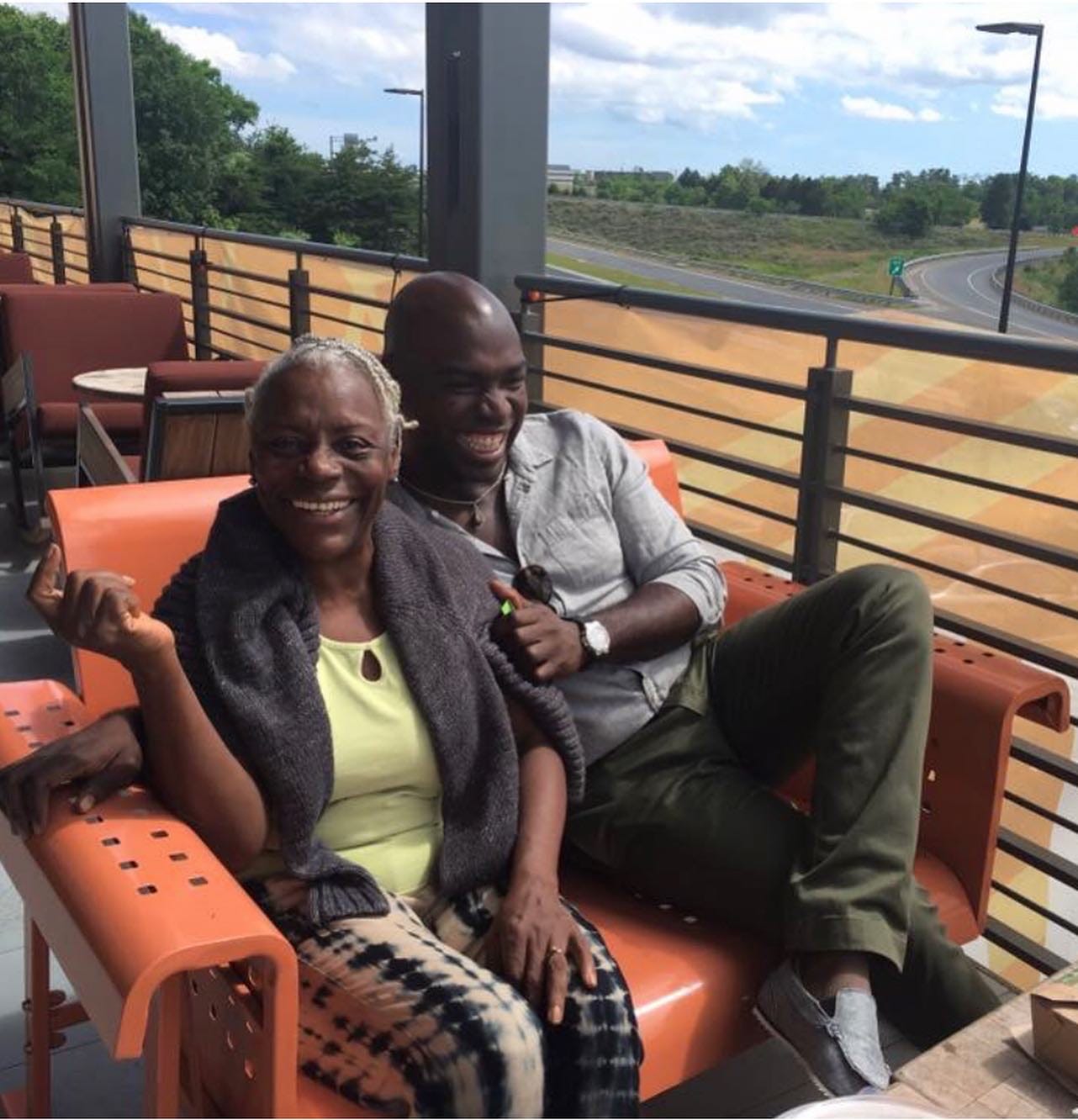
I came to this country carrying all of that. I just didn’t know what to do with it here.
The culture I arrived in had a different gospel. It said: struggle is how you prove you are serious. Hustle is virtue. Rest is something you earn after you’ve bled enough for it. Ease is suspect — a sign that you aren’t trying hard enough, or that you don’t understand how hard this is, or that you are naive about what the world requires of you.
I tried to run that program. I fell in line. And I couldn’t quite get it right, because the operating system was wrong. Because somewhere underneath the performance, I kept reaching for something that didn’t look like striving. Something that looked more like stride.
In the last month of high school, I went through something difficult — the kind that leaves a mark. A friend wrote in my yearbook that she admired how I took life in stride. She had watched me move through that hard month without breaking. She saw something I hadn’t yet named. She put it in handwriting.
I heard it. I couldn’t quite feel it. Because I was trying to receive a signal on the wrong frequency.
For years afterward, friends would call me regal. Dignified. Present in a way that steadied rooms. I could hear the words, but they glanced off me because I was so busy trying to fit into a shape that was never mine. You cannot fully receive a truth about yourself while you are performing a lie about yourself.
What I know now is this: ease was never naivety. It was inheritance. It was what my mother gave me before I had words for it, on a red-soiled continent before the war, before the leaving, before the long years of trying to land somewhere that kept moving.
There is a thing that happens to people who are bigger than their containers.
A python placed in a small jar will only grow to the size of the jar. The python is not failing. The python is not broken. It is simply constrained by the boundary of what it’s been given to inhabit. In the Amazon, that same python becomes what it was always meant to be — long and strong and moving through the world at full size.
I see this everywhere I look. I see people who have been told, by family, by culture, by the accumulated weight of circumstance, that the jar is all there is. And they shrink. Not because they are small. Because they have accepted a small story.
What I find myself doing — what I have always done, even when I couldn’t name it — is pointing toward the Amazon. Not with instruction, not with a program or a system. With presence. With the insistence that what you were given before the world got to you is more real than what the world told you you were. With food at the table, with a conversation that goes somewhere true, with the simple act of being seen.
That is my charge.
If the river gave me this clarity that morning, it wasn’t only for me.
That’s the whole point of the lower lights. You find your shore. You let the clarity settle in you the way minerals settle into water — slowly, deeply, becoming part of what you are. And then you keep your light burning. Not because you have arrived somewhere others haven’t. But because someone is out there in the dark water right now, navigating, hoping for something steady to steer toward.
You don’t have to struggle to be worthy of what was given to you.
You don’t have to earn the inheritance your mother handed you with both hands.
You don’t have to accept the narrative.
Gloria Antoinette Bishop had a charge to keep and a God to glorify. She kept it in ease. She kept it in grace. She kept it by teaching people that dignity wasn’t a reward for suffering — it was simply who they already were.
She is gone now. But the lights she lit are still burning.
I am one of them.
You might be one too.
Come sit by the river a while and find out