
The Blood Doesn’t Lie

Inspired by Conversations with Few Friends
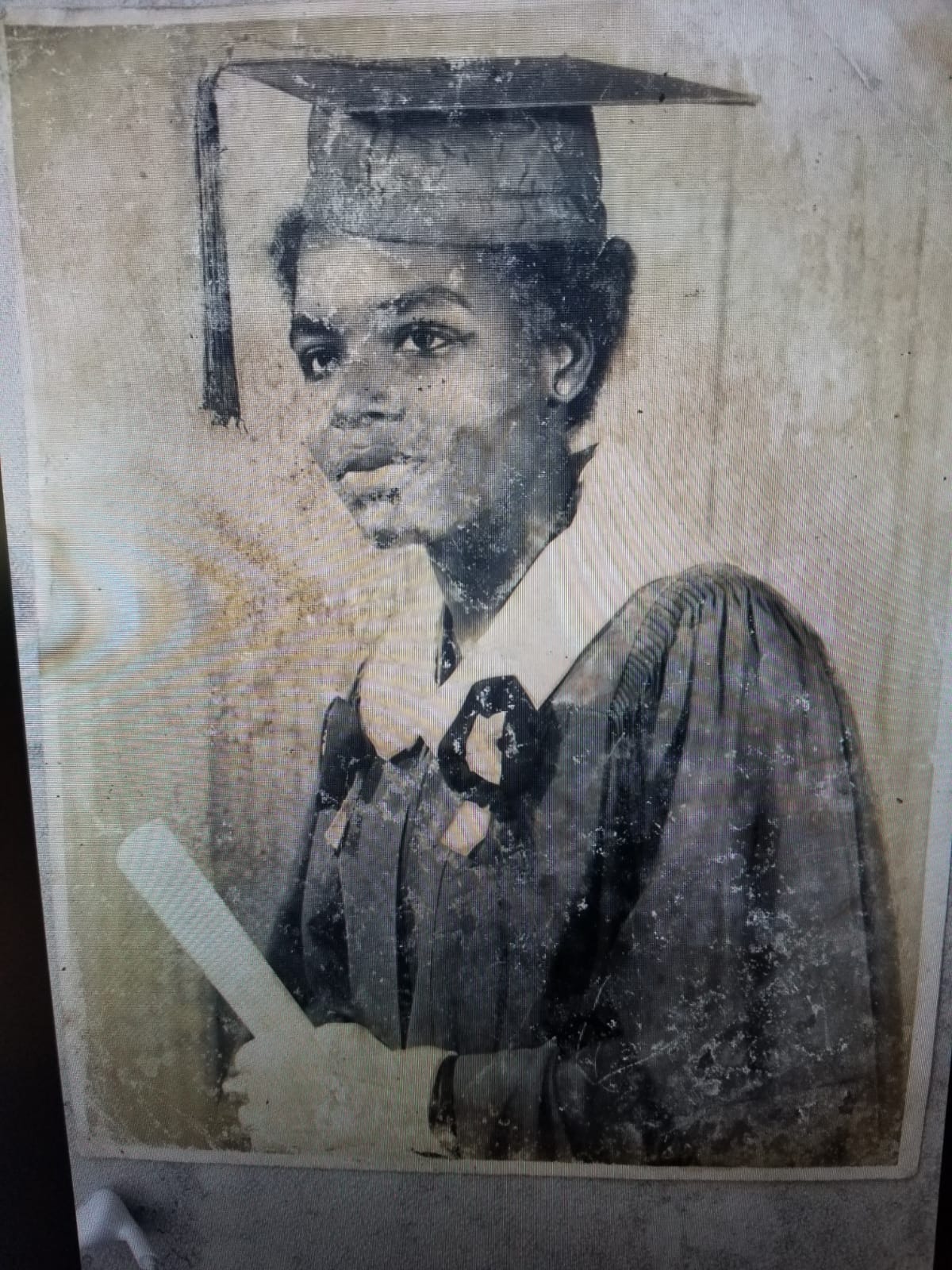
My mother carried two oceans in her.
On her mother’s side —her grandmother’s grandmother, a woman from Beaufort, South Carolina. Probably the daughter of an enslaved person and the man who owned her. She crossed the Atlantic as a teacher and helped build Liberia.
On her father’s side — her grandfather, a man named Bishop. That may not have been his name at all. It may have been the name of a church official he worked under, or someone who owned his people, or simply a name assigned like a tag. Nobody alive knows for certain. He had moved through Spain, Portugal, Fernando Po — a small island sitting between Africa and everything else — before landing in Liberia, where he met my great-grandmother, had children, and then disappeared back the way he came. Never heard from again.
These two people never met each other.
But they both became me.
So you’ll forgive me if I find it difficult to hate anyone cleanly.
There’s a kind of moment I’ve become interested in. Not the “aha” moment — that bright flash when something clicks and closes. I’m talking about the “hmm” moment. The one that opens something. The one that arrives through the side door, usually wearing a joke.
Laughter does that. It drops the guard. You cannot laugh and stay defended at the same time. Something gets through in that unguarded second — not a conclusion, just a crack. A little more air. A little less certainty about the wall you were leaning on.
I’ve been in enough conversations about race, about colonialism, about who wronged whom and who owes what, to know that certainty is usually the problem dressed up as the solution. Everyone arrives armed with their narrative. Everyone leaves having confirmed what they already believed. Nobody goes home changed. Just more fortified.
The “aha” people feel like the most fortified of all.
Here’s a thing that made me laugh recently.
We call plants by their Latin names. Lavandula. Ocimum basilicum. Aloe barbadensis. And we call this universal. Scientific. Neutral.
But who decided Latin was the neutral language? Who decided the Peruvian name didn’t count? The Yoruba name? The Irish name? The Bassa name? At some point, somebody with enough ships and enough soldiers decided that their language of record was the language of record. And now we teach it to children as though it fell from the sky.
That’s not science. That’s power wearing a lab coat.
And once you see that — once you really see it — you start noticing the lab coat everywhere. In which histories get taught. In which grief gets mourned publicly and which gets swallowed privately. In which family structures are called functional and which are called broken. Someone set the compass. And then convinced everyone else that north was always north.
My bloodline is the argument against that compass.
I am Liberian. I am Nigerian. I am the descendant of a woman from Beaufort, South Carolina whose own parentage was a crime that nobody was ever charged with. I am the descendant of a man who may have been named after whoever owned him, who wandered through Spain and Portugal and a colonial island and ended up in West Africa long enough to leave children and then vanish.
Which side of history am I supposed to be on?
And more honestly — which side of history are any of us supposed to be on, if we were brave enough to actually trace the blood?
This is not a both-sides argument. I am not saying that harm didn’t happen. It did. It is documented. It is still happening. The compass being set by one group of people at the expense of everyone else is not ancient history — it is Tuesday.
But here is what I have noticed. The story of the wound, when held too tightly, becomes its own kind of prison. Not because the wound isn’t real. It is. But because the story requires a permanent villain. And a permanent villain requires a clean line between us and them. And that clean line — if you actually trace the blood — does not exist.
Hating them is hating yourself.
Not as metaphor. As biology. As genealogy. As the literal truth of what happened when people moved across oceans and continents and islands, consensually and violently and everything in between, and made children who made children who made you.
The sober eye is not a comfortable eye. It doesn’t let you off the hook and it doesn’t let anyone else off the hook either. It just refuses to be comforted by a simple enemy.
Because a simple enemy is actually a gift. It organizes the pain. It tells you where to point. The harder thing — the thing I am slowly learning to practice — is to hold the full complexity without collapsing it into either easy forgiveness or permanent war.
That is not neutrality. Neutrality is cowardice dressed as wisdom.
This is something else. This is looking at the whole tangled, beautiful, violent, improbable thing — your bloodline, your history, your contradictions — and saying: I see you. All of you. And I refuse to need you to be simpler than you are.
My great-great-great-grandmother crossed an ocean to help build a nation.
My great-grandfather crossed several and then disappeared.
Neither of them asked my permission to make me complicated.
But here I am. Complicated. Grateful. Loving it. Finding it very difficult to hate anyone cleanly.
Hmm.